
Community for Exploration of Innovation in Learning Environments
Synopsis
Sponsored by the Office of the Provost, a year-long program for faculty wishing to learn about and enact more equitable and inclusive practices in their teaching and curriculum design.
Want to Connect?
Contact me
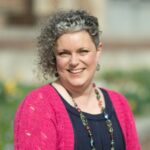
Lorien R. Carter, MSW
Faculty Fellow for Inclusive Pedagogies through the Washington University Office of the Provost
Program Overview
Sponsored by the Office of the Provost in partnership with the Center for Teaching and Learning (CTL), the Community for Exploration of Innovation in Learning Environments is a year-long opportunity for faculty who are committed to implementing pedagogical and curricular enhancements that will measurably improve the WashU undergraduate educational experience, especially for historically underrepresented and first-generation college students.
This program will use a collaborative, cohort-based Faculty Learning Community (FLC) model to support faculty as they develop equitable and inclusive learning practices within a particular course. FLCs are small groups of cross-disciplinary faculty who “engage in an active, collaborative, year-long program with a curriculum focused on enhancing teaching and learning.”[i] FLCs have “the capacity to promote and sustain the learning of all professionals in the school community with the collective purpose of enhancing student learning.”[ii] In FLCs, faculty work together to “reflect on pedagogy and make changes in their own teaching practices to improve student learning outcomes.”[iii] Participation in an FLC allows faculty to build relationships that enable them to learn from others, tackle practical problems, and develop a shared repertoire of resources: experiences, stories, tools, and ways of addressing recurring educational challenges.”[iv]
As a joint effort by the CTL and the Office of the Provost, this program is facilitated by staff from the CTL in collaboration with Lorien Carter, Professor of Practice in the Brown School of Social Work and current Faculty Fellow for Inclusive Pedagogies through the Office of the Provost.
Program Structure
Program Commitment
In this program, faculty participants will first participate in guided conversation in cohort meetings to enhance their understanding of inclusive and anti-racist pedagogical practices and curricular approaches. FLC sessions in the fall semester will begin with a set of readings and activities that describe inclusive pedagogies and culturally responsive teaching practices and provide suggestions for implementation of pedagogical and curricular change appropriate to various fields and disciplines. Topics will focus on inclusive and equitable course design, reimagining the curriculum, designing transparent and equitable assessments, and fostering an inclusive classroom climate.
Then, in the second half of the fall, faculty participants will develop a concrete implementation plan that includes specific and substantive changes to a course (design, content, assessment, curriculum, and/or teaching methods) that will have the potential for a measurable positive impact on equitable student learning and academic success. In the spring semester, faculty participants will implement their inclusive teaching plans and share their ongoing results with their faculty colleagues in monthly meetings and through an end-of-program reflection.
Faculty participants will be expected to make a year-long commitment (Fall 2026-Spring 2027). The time commitment is anticipated to be between 35 and 40 hours total, which includes preparation time of 1-2 hours each month, cohort sessions, and individual course planning and reflection time. In Fall 2026, the cohort will meet 8 times (twice per month) and in Spring 2027, the cohort will meet 4 times (once per month). Each cohort session will be 90 minutes in length. The standing meeting dates and times will be determined based on availability of faculty participants. Participants will have the opportunity to participate in formative evaluation of the model.
$2,000 Inclusive Teaching Grant
Faculty who actively participate throughout the cohort meetings, develop, and then implement their inclusive teaching plan in a Spring 2027 course, and complete the program reflection will receive a $2,000.00 inclusive teaching grant. The grant is paid out as a contribution to the faculty member’s professional development, discretionary or research account.
Program Goals
Aligned with the university’s commitment to curricular excellence, this initiative embeds high-impact teaching practices that expand access and improve academic outcomes, especially for historically underrepresented and first-generation college students. It also reinforces the Center for Teaching and Learning’s mission by advancing educational excellence through sustained faculty engagement and by fostering a culture of reflective, collaborative, and inclusive teaching.
Frequently Asked Questions
Who is eligible to participate?
All full-time faculty with teaching responsibilities on the Danforth campus during the 2025-26 academic year are eligible to apply. Priority will be given to those who teach undergraduate courses. In order to engage in the applied practices of the CEILE program, faculty members should have a foundational knowledge of inclusive pedagogy, equitable learning, and other EDI principles.
If there are more registrants than space in the program, how will decisions on applications be made?
The program is currently limited to 12 faculty per academic year. While a number of factors will be considered as we decide acceptance, there will be a particular emphasis on including candidates from a variety of departments and disciplines across the Danforth campus. We are committed to including tenured and tenure-track as well as teaching and practice faculty, with attention paid to participants across various career stages.
How do I apply to participate?
You can apply to participate in the program by filling out the form at the bottom of this page. Please note that applications to take part in the program will be due on May 29th.
How do I fulfill the requirements to receive an inclusive teaching grant?
Faculty who actively participate in the cohort sessions during the 2026-2027 academic year, who develop and then implement their inclusive teaching plan in a Spring 2027 course, and who complete the program reflection will receive a $2,000.00 inclusive teaching grant in the form of a contribution to the faculty member’s professional development, discretionary or research account. Grants will only be distributed to those who complete the program, including inclusive teaching plan implementation and reflection, in its entirety.
Do I have to be an inclusive teaching expert to join?
No! While we ask that participants describe their involvement in EDI professional development programming, we recognize that each faculty participant may be in a different place in their understanding of anti-racist and inclusive teaching and curriculum practices at the start of the program. All who are interested are welcome to apply!
Who do I contact if I have further questions or if I need more information?
For questions, please reach out to Elina Salminen, Assistant Director of Educational Development, at elinasalminen@wustl.edu, or Lorien Carter, Inclusive Pedagogies Faculty Fellow through the Office of the Provost, at lcarter@wustl.edu.
References
[i] Cox, M. (2004). “Introduction to Faculty Learning Communities.” in Building Faculty Learning Communities, Number 97, Spring 2004 issue of New Directions for Teaching and Learning. pg. 8.
[ii] Bolam, R., McMahon, A., Stoll, L., Thomas, S., & Wallace, M. (2005) Creating and sustaining professional learning communities. Research Report Number 637. London, England: General Teaching Council for England, Department of Education and Skills; 145.
[iii] McLaughlin, M. W., & Talbert, J. E. (2006). Building school-based teacher learning communities: Professional strategies to improve student achievement (Vol. 45). Teachers College Press.